Posts

The Airport and the Environment: Air

Image
As according to environmental research, the most primary environmental issues that come from airport operation are Green House Gasses emissions, noise pollution, waste, congestion and land utilization, in addition, the FAA also points out to water contamination. In my opinion, air pollution, noise pollution and water pollution should be the main categories, as they encapsulate other important categories mentioned above. I would however add soil or land contamination, and third party risk as subcategories to be studied, as these categories thoroughly impact wildlife and the general population. I found these categories to be the most determinate after reviewing Visser, H., & Wijnen, R. (2008), chapter 1’s analysis of the facts, where noise effects, air quality and pollutant emissions and third party risk (or the risk created by the concentration of aircraft crashing into populated areas) are studied in depth. Although it is hard for me to determine a most critical factor, due to th...

The Federal Aviation Act of 1958

Image
In this blog post I would like to talk about one of the most revolutionary acts (in its time) which was passed by the USA in 1958. This act is known as the Federal Aviation Act, in simple words, this act created what we know as the FAA, when all duties from the Civil Aeronautics Authority were passed onto this new, and most importantly independent organization. Although not entirely independent, as the FAA is a federal authority and reports directly to congress, it was an organization very different to the CAA. Now, why was this law important? In my opinion it was crucial, as the new FAA was tasked with the duty for promoting air traffic control installations, promulgating air traffic laws, and overseeing all airspace regulation. We can see the need for a regulatory authority such as the FAA if we look back on some of America’s worst catastrophes. As many authors have cited in my research, one of the accidents that pushed for this legislation was the Grand Canyon collision (United,...

Human Factors

Image
As according to the PHAK’s second chapter of human factors, human factors or error directly cause or at the very least, play a great part in aviation accidents. This chapter defines human factors as science as according to the different disciplines that study them (psychology, anthropometrics, computer science, etc.) However, I have chosen to define human factors as how the environment a person experiences results in their overall performance. Specifically oriented to aviation, human factors mean how external and internal factors influence an aeronautical or support worker’s ability to perform in a way that fosters safety and precision. According to a study of accident statistics, human error is responsible for around 75–80 percent of all aircraft mishaps. Human error is studied directly in human factors. And, in summary, there are three main types of human error: omission (not performing a task), commission (performing a task incorrectly), and extraneous (performing an unauthorized ...

Cybersecurity Issues in Aviation

Image
Cyberattacks are one of the most threatening threats to aviation security in this age, better known as the technological era. While our networks are extremely efficient and safe in fundament, they are still very vulnerable to cyber attacks. As shown in research, we are most prone to SCADA or “infiltration of supervisory control and data acquisition” hackers. As the interconnection of aviation services grows, so does the risk of security breaches. Commercial aviation faces some unique issues when it comes to cybersecurity. Internal security breaches, for example, or assaults from outside sources, such as the supply chain and network connections inside the industry, are examples of cyberthreats. These manifest themselves as system failures, network issues and issues in flight operations. There are many systems that could be attacked, these include but are not limited to passport control, security scanning, airline systems and cloud-based information systems. TSA, or the Transportatio...

The Fuel System

Image
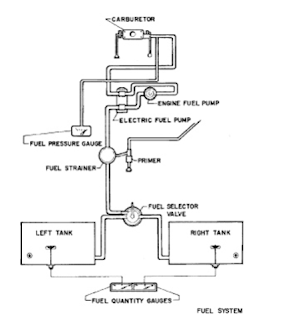
In an aircraft, many systems work in synergy, but in this blog post, I will write about issues arising in the fuel system. The fuel system is designed to deliver an uninterrupted supply of clean fuel from the fuel tanks to the engine, in a continuous flow. It must be available to the engine under all situations of engine power, altitude, attitude, and throughout all allowed flying maneuvers. There are two kinds of fuel systems: the gravity-feed system, which utilizes the force of gravity to get fuel to the engines; and the fuel-pump system, in which aircraft have two fuel pumps. In this system, the main pump system is powered by an engine, with an electrically powered auxiliary pump available for use during engine startup and in the event that the engine pump fails. The fuel system is composed of different parts, including the fuel primer, fuel tanks, fuel selectors, fuel gauges, fuel strainers, sumps, and drains. Due to all of these components, there are many issues that could arise...
Image
There are many environmental factor that affect aircraft performance, however, for this blog post I have chosen to discuss icing. In a study conducted by the ACTF in the     2011 – 2015 period, they found that in LOC-I accidents, 42% met with meteorological threats, of this percentage, 40% encountered icing conditions. Hence, this threat plays a substantial part in the total number of LOC-I disasters. When big convective clouds hold vast amounts of super-cooled water liquid droplets being below 0 degrees Celsius, these droplets are inclined to freezing instantaneously and adhering to the airframe. When not overcome by in-place anti-icing systems, these droplets can result in a decrease of lift and an increase in weight of the airframe which due to the implications of aerodynamics, may lead to a decrease in aircraft performance, resulting in a catastrophe. Icing in engine intakes can disrupt the engine gas path, as well as icing in probes and sensors can cause system failures a...
Image
  Ethics in aviation mean many things different things to me. By definition, ethics means the set of principles the industry has been built upon, in order to communicate its root values. Ethics, therefore, are applied to everyone in the industry, from its workers (including pilots, air traffic controllers, mechanics, engineers, etc.) to its chief executive officers and policy-makers. While thinking of how to approach this post I realized ethics mean safety. When speaking of ethics not all decisions are life or death, but privacy, transparency, integrity, and fairness are among the most important factors. This is especially true in Aviation, if employees and policymakers are not held up accountable for their actions and maintain good moral standards and follow regulations (such as the ones being set by the FAA), events could be tragic. When passengers choose to transport in airplanes or jets, they must feel safe knowing employees of all departments are following the higher standard ...